Why My Autism Hates the Fans at the Hawker Centre
By Jack Penman, 31 January 2026 Singapore
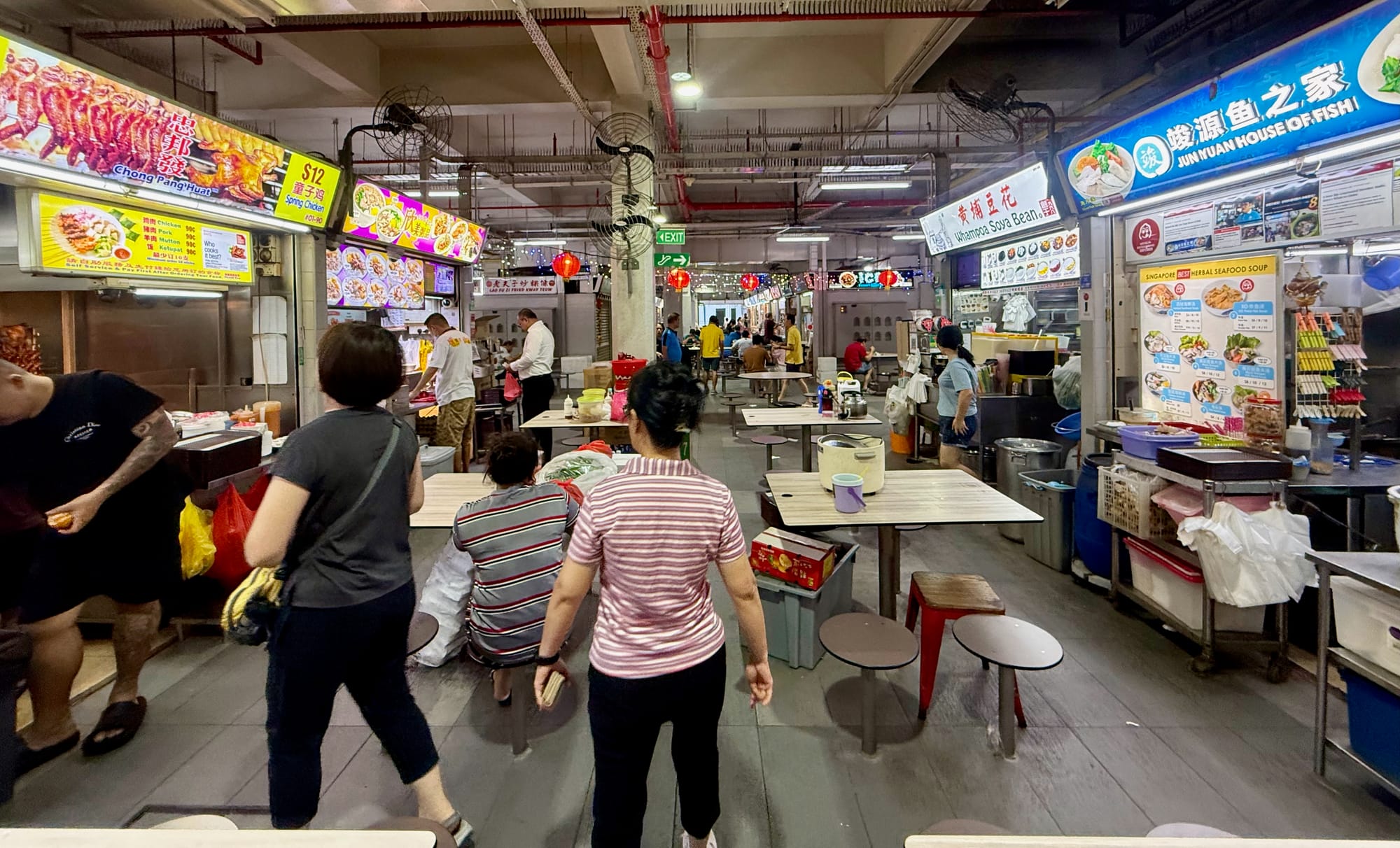
We went to the Old Airport Road hawker centre (large open-air places in Singapore, full of hawker food stalls), yesterday afternoon for dinner, which is no big deal, I’ve been to hawker centres hundreds of times, but this time my autism decided it wasn’t happy and let me know in no uncertain terms.
For context, I have severe ADHD (Attention Deficit Hyperactivity Disorder) and autism. My ADHD is very obvious and was diagnosed over 30 years ago. My autism was another story. You see, my ADHD overshadowed my autism so effectively that no one, including me, suspected I was autistic.
The first hints of autism appeared in February 2025 after a change in my ADHD medication dramatically improved my ADHD symptoms. This improvement allowed my autism to begin emerging from underneath my ADHD for the first time. Since then I’ve been experiencing many changes as my autism takes its proper place alongside my ADHD. In December 2025 I was formally diagnosed with autism and it is now largely dominant over my ADHD. Now my sensory system is way more sensitive, making seemingly trivial things like light, sound and certain types of physical touch, potentially very unpleasant for me. Much of the autistic experience revolves around the very intense ways in which we experience the sensory world around us. Including social interactions which can be very challenging and draining. Now on with my story.
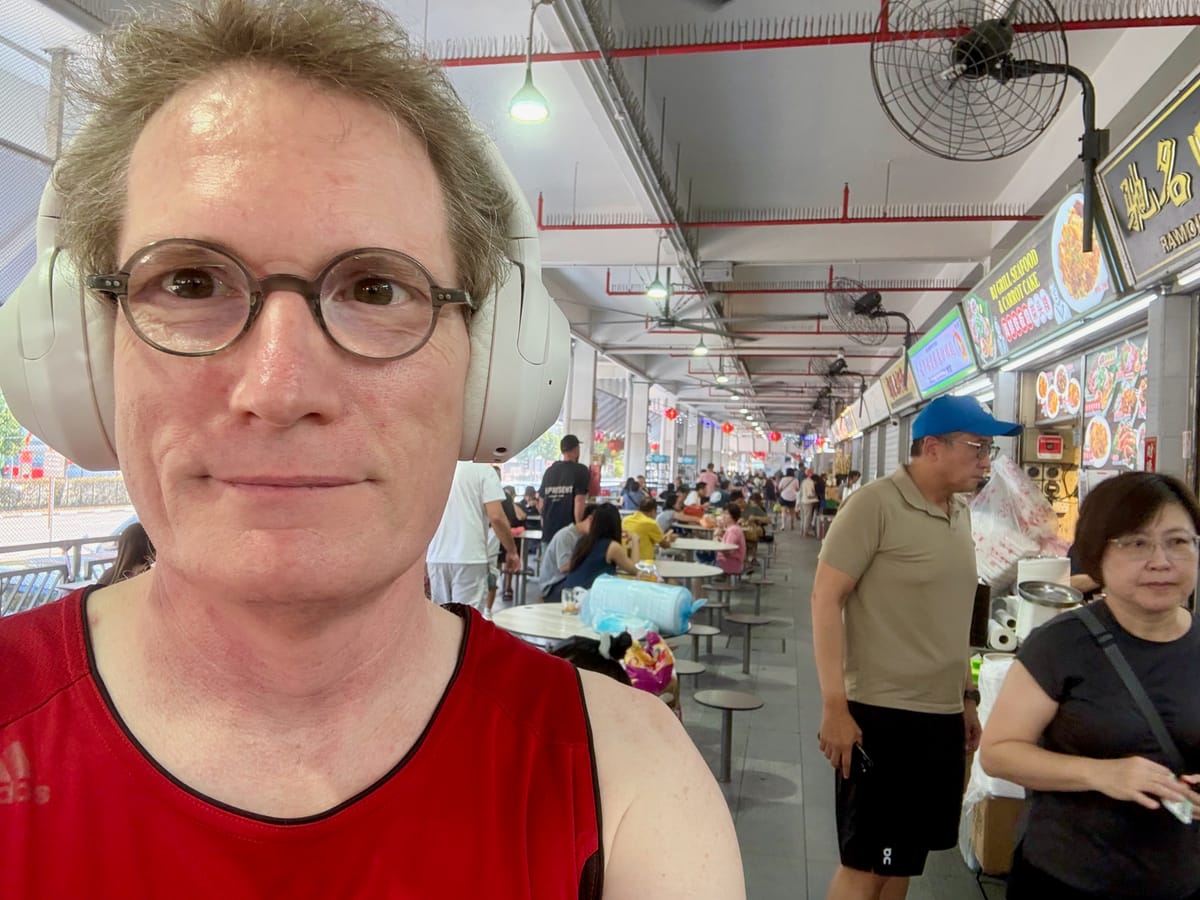
The hawker centre was packed as usual and busy crowds are not my favourite thing, especially when it's bright and noisy. So I was beginning to feel my autism's displeasure as we walked around, deciding what to eat. A hawker center is a cacophony of stall keepers cooking, extractor fans running, refrigerator motors humming, customers talking as they browse the stalls, and lots of people eating with the accompanying sounds of cutlery and plates. This vast range of sounds, intermixed with crowds of people can be very overwhelming for autistic people, including me. The reason why is neurotypical brains are very good at filtering out background sounds and people, but my autistic brain is not. So for me they all arrive simultaneously, at full intensity and cause sensory overload very quickly. Thankfully my ANC (Active Noise-Cancelling) headphones protect me, while allowing me to remain engaged with my surroundings, so the sound wasn’t as problematic.
Having collected our food and found a table, we sat down to enjoy our food. For me, that’s when things started to fall apart. Thanks to Singapore’s tropical climate, most hawker centres have massive ceiling fans, providing a continuous stream of cooling air from above. I was wearing a singlet and my arms were fully exposed. The constant buffeting of the wind on my skin was causing way too much sensory input for my autism to deal with. After a while, I could feel my insides tensing up and my body starting to feel wrong, like something’s not right but I don’t know exactly what. This often translates into me feeling like I want to jump out of my skin.
My difficulties in describing how I’m feeling stem from my bad interoception. Interoception is the brain’s ability to sense things in your body like: hunger, thirst, anxiety, nausea, temperature, pain, needing the toilet, and so on. This is fairly common for autistic people. As the sensory input from my arms increased it seemed to amplify my other senses as well: sound, light, people. Thus sensory overload can often have the effect of increasing the person’s sensory sensitivity, ironically making things worse.
I’m also very sensitive to light, especially the cool daylight-type lighting often used in hawker centres, this wasn’t helping and just added to my sensory overload. I’m not certain, but I could have sworn that during this overload period even the food tasted different and not in a good way.
So for me, while the food and company were great, I could feel something going very wrong, and if I didn’t act I was going to lose it. I was completely dysregulated and in sensory hell.
Eventually I couldn’t stand it anymore. I asked for the car keys and excused myself to get my long sleeve top, which was the only thing I could think of that might help. I put it on in the car, layered the singlet over it, and went back inside. It felt so good when my skin was covered again.
The difference was like night and day. I was no longer being assaulted by the buffeting airflow from the fan, and my whole system settled right down. I didn’t feel too hot and even if I had, there was no way I was taking that top off. It wasn’t perfect. I still had sensory issues, but now I could live with them and start to enjoy the people around me. And I’m almost certain the food tasted better from then on.
I was amazed at how significant a difference such a simple change made. I was the ONLY person in the hawker centre wearing headphones and a long sleeve top, but given the alternative, I really didn’t mind. Plus, being autistic, I’ve come to accept the fact I’m going to look different sometimes and that’s fine.
Reflecting on this experience has helped me appreciate just how vulnerable I am to my environment. I don’t mean personal preferences. I mean my environment can literally change how food tastes and, if I fail to act, overwhelm me to the point of shutdown. Initially that realisation made me feel scared and vulnerable. It led to thoughts like, “How am I going to survive like this?”
My ADHD has always been there but it’s never really been something that could stop me doing what I wanted to or going to the places I like. But my autism is a completely different matter. It can shut me down completely or put me into a meltdown, and I have very little ability to stop it. Moving forward: ADHD can make things challenging, autism can shut me down completely.
Now I know I’m vulnerable, I can take my internal state and my environment seriously. I can listen to my body and, crucially, act. That’s the difference between being powerless and being empowered. This was a big lesson for me.
If that means doing things that seem weird to others, so be it. My new reality is that I need to actively control the sensory load coming in through my skin. That means wearing leggings and long sleeve sports tops most of the time, not as a preference, but because they genuinely help regulate my system. The material doesn’t irritate my skin, and the constant pressure from the leggings is deeply regulating for me. And I get the added advantage of being able to wear clothes that previously irritated my skin so much I couldn’t wear them.
If I don’t do these things, I risk ending up back in experiences like this or worse.
As a newly diagnosed autistic adult, I know there will be times when no matter what I do I’ll still end up in shutdown or meltdown. That’s just the reality. But for the most part, the more I learn how my brain and body work, the better I can support myself and the happier and healthier I will be. And finally move closer to the full potential I’ve always known I was capable of.
More for Nerds (like me)
For anyone interested in why something as simple as airflow on my arms could have such a big impact, this experience makes a lot of sense through the lens of sensory processing and nervous system regulation.
Many autistic people, including me, have sensory systems that are especially sensitive to unpredictable, constantly changing input, particularly touch. The airflow from large ceiling fans isn’t a steady sensation, it’s irregular, shifting, and impossible to ignore. That kind of sensory input can quickly overwhelm my nervous system because it never settles into a pattern my brain can filter out.
In my case, having my arms exposed meant my skin was constantly receiving variable sensory signals from the fan. Once one sensory channel becomes overloaded, my brain’s ability to filter all sensory input drops. That’s why the sound felt louder, lights felt harsher, people felt more overwhelming, and even the way the food tasted changed. It’s not that those things suddenly became worse, it’s that my nervous system lost its capacity to manage them.
Covering my arms with a long-sleeve top didn’t just make me more comfortable, it reduced the amount of sensory information entering my system. The fabric acted as a buffer, turning chaotic, unpredictable touch into something more consistent and tolerable. This allowed my nervous system to down-regulate and regain some balance, which is why I felt so much better and was able to enjoy the dinner.
The constant, even pressure from leggings works in a similar way for me. Predictable, steady sensory input is often regulating for autistic nervous systems, whereas variable input can be destabilising. That’s why things like compression clothing, weighted blankets, or firm pressure can be calming, while light touch or drafts can be extremely uncomfortable.
And when I say “extremely uncomfortable” it can become far more than that, it can literally cause me to shut down to the point where I can’t talk, I can’t read text (I can still see the text I just can’t do anything with it) and I can’t really respond to people in a normal coherent manner if at all. So, unchecked, for an autistic person the escalation can be swift and severe. An important point to make is that I don’t have a choice, my body does this and I’m along for the ride. Once I run out of coping techniques, or they don’t work, I’m no longer in full control. If my system decides to shut me down then that’s it, I don’t get much say.
When my nervous system settled, everything else followed. My perception of sound, light, taste, and social interaction improved because my body was no longer in a state of overload or threat. In that sense, the clothing change wasn’t a minor comfort tweak, it was a physiological intervention.
Understanding this has helped me adjust the way I do things. So now I take into account how a given environment might affect my autism and what measures I can take to reduce the potential impact. This can mean wearing my noise-cancelling headphones, especially if I know a place will be noisy. I can sit somewhere the lights are not so strong and have safe foods and fidget toys available to help me regulate my system. And probably the most powerful measure of them all is to simply say no or if I’m already there and getting overwhelmed: leave early.
Safe foods are foods and/or snacks that many autistic people rely on as a safe source of nutrition when they are overwhelmed, teetering on or in shutdown/meltdown. It's not just food I like. It's food that won't hurt me, won't surprise me, won't demand anything from me. Food I can trust when I can't trust anything else, including my own nervous system.
Simple steps like these let me enjoy the people and world around me without having to suffer in silence while masking (hiding my internal struggles from the outside world in an attempt to appear normal all the while feeling anything but), as many neurodivergent people do.
Another important point is the idea of sensory stacking. For the autistic brain, sensory inputs don’t arrive as singular events, one replacing the other. Instead they accumulate and stack on top of one another resulting in a vastly more intense sensory experience. When my system starts to get overwhelmed this effect can multiply in unpredictable ways due to things like how overloaded I was in the first place, how much sleep I've had, the time of day, how well my ADHD medication is working, how many social things I've had to do and much more besides.
Thus the same sensory inputs may not necessarily result in the same experience for my system. And it’s this unpredictability that can be so disconcerting for autistic people and neurodivergent people in general.
While this may sound scary and unpleasant, and yes it certainly can be, I don’t want people to think of this as some kind of death sentence. It’s really not. Instead it's a set of challenges and I am learning how to manage them and that's the most empowering thing I can do. You can help the autistic or neurodivergent people in your life by learning from them, asking questions and listening to the answers.