Being Neurodivergent 101: What it is, What it’s like and How to Help
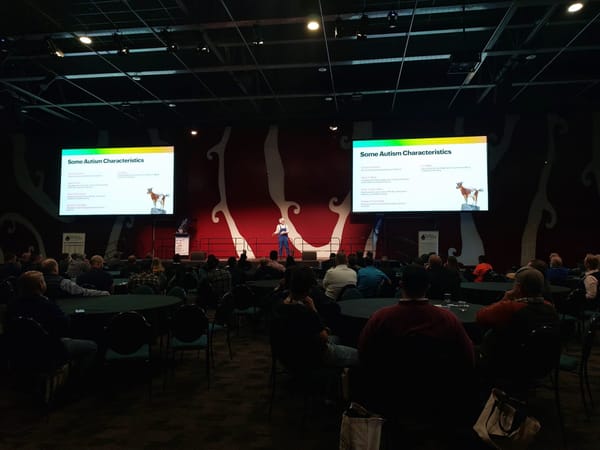
This is the title and abstract of my paper about neurodiversity that I will be presenting at the Water Industry Operations Group NZ (WIOG) annual conference in May 2026 at Rotorua. Being a AuDHD electronics and software engineer, I'm so grateful for the opportunity to be a part of the conference that brings so much to the amazing people keeping our water in New Zealand safe and reliable.
Once I have presented the paper, I'll post it here as well so stay tuned.
Abstract:
In New Zealand, as of 1 February 2026, specially trained GPs and nurse practitioners (NPs) can now diagnose ADHD (Attention Deficit Hyperactivity Disorder) and start medication for adults. This is a significant and far-reaching shift because people diagnosed with ADHD have a 10–16% chance of meeting the criteria for an autism diagnosis, while 50–70% of those diagnosed with autism may also meet the criteria for an ADHD diagnosis.
These overlaps mean that a significant number of adults seeking or being directed toward an ADHD assessment may in fact be navigating both conditions. In the UK, an estimated 80% of adults with ADHD and 90% of autistic adults over 40 remain undiagnosed; rates in New Zealand are likely very similar.
Because awareness of neurodivergence is rising rapidly in schools, more children are being diagnosed than ever before. For the workforce, this has a crucial ripple effect: parents who recognise their own traits through their child’s assessment often pursue diagnosis themselves. The result is a steady influx of neurodivergent workers entering the workforce into environments that are not yet equipped to understand or support them. Moreover, there are a significant number of people in the workforce who are suffering unnecessarily as a result of their undiagnosed neurodivergence, resulting in self‑doubt and an apparent failure in their job that is through no fault of their own.
Overseas studies suggest that neurodivergence is overrepresented in engineering and technical fields. In one European survey of laboratory and scientific workplaces, 48% of employees identified as neurodivergent, more than double the estimated population average. University application data from the UK shows that computing applicants are 2.7 times more likely to be autistic than the average applicant, and a UK engineering sector survey found 19% of workers identified as neurodivergent, with the authors noting that this likely underestimates the true figure. While comparable New Zealand data is limited, there is no reason to believe the pattern differs.
For the water industry, comprising large numbers of operational professionals, engineers, and technicians, the proportion of neurodivergent individuals is likely to be significantly higher than the general population, with many undiagnosed.
When supported effectively, neurodivergent people bring distinctive strengths that are highly valued in technical and operational environments. Research shows that neurodivergent people in technology roles can be up to 140% more productive than their neurotypical peers in certain tasks, and teams that include neurodivergent members have been found to be up to 30% more productive. This is not to present one as being better than the other, rather that identifying, understanding and supporting neurodivergent staff has the potential to bring significant benefits to all.
This paper offers a lived‑experience perspective on what it means to be AuDHD, explores the advantages and challenges, and provides practical, low‑cost accommodations that help neurodivergent people and their organisations thrive.